


Same day Dryer repair in West town, Chicago and surrounding areas.
We offer Dryer repair of any brand in any condition. Our technicians have a lot of parts in stock so we can fix your dryer at first visit. If you have a problem with dryer call us.
Dryer Repair in West Town: Local Service Focus
In West Town homes and apartments, common dryer problems are no-heat, long drying cycles, noise, and airflow restrictions. We test the full heating and vent path before quoting repair.
- Fast diagnostics for gas and electric dryers
- Common igniter, thermostat, and roller parts on hand
- Service window with clear arrival communication
Book dryer repair in West Town: +1 (773) 243-4565.
West Town Dryer Repair: venting and heating issues
Typical ZIP coverage: 60622, 60642. Dryer service in West Town commonly includes no-heat failures, overheating safety trips, and poor airflow from long duct runs. Many calls are solved faster when vent configuration and appliance placement are confirmed before arrival.
Service call is $75 depending on appliance type and job conditions, and is applied toward completed repair when applicable.
- Tell us if clothes stay damp after one full cycle.
- Mention gas or electric dryer type and any burning smell.
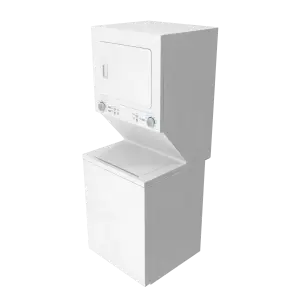
- For stacked laundry closets, send model tag photo later if needed.
Related pages: Dryer repair Chicago | Appliance repair West Town | Washer repair West Town | Oven repair West Town | Service area coverage
West Town practical note: many dryers in this area run on long vertical vent routes. We usually verify airflow, thermal fuse status, and vent backpressure in one diagnostic sequence to avoid repeat overheating and no-heat callbacks.
Dryer repairs we have actually run in West Town
Between Mar 2025 and Sep 2026 we closed 5 dryer calls in West Town (60622) — part of 22 appliance jobs on this route. The brands we actually opened up here: GE (2), Samsung, Frigidaire. The fault we hit most often on dryers in West Town is drum bearings replaced (3 of 5 visits).
| Date | Where | Unit | What we did |
|---|---|---|---|
| 2026-09-17 | 2300 block of W Rice St | Samsung dryer | Sensor replaced |
| 2026-08-24 | 2200 block of W Walton St | GE dryer | Diagnostics and repair |
| 2026-04-25 | 2300 block of W Iowa St | Frigidaire dryer | Drum bearings replaced |
| 2025-08-07 | 800 block of N Wood St | GE dryer | Drum bearings replaced |
| 2025-03-20 | 1600 block of W Grand Ave | Dryer | Drum bearings replaced |
Why dryers in West Town break the way they do
West Town mixes 19th-century workers cottages and two-flats with loft conversions and new-build condos, often on the same block. Drum bearings are the signature West Town failure — three of our last five dryer calls in this ZIP. Older units in cottage rehabs run on floors that flex, and once the drum rides off-centre the glides and rear bearing go quickly, with the grinding noise as the only warning.
Every job above is a real visit from our dispatch log; house numbers are rounded to the block and unit numbers left out. If your dryer is doing something that is not on this list, call or text +1 (773) 243-4565 — we are on this route most weeks.
Why West Town dryers fail at the duct more often than at the dryer
This part of the city was built without laundry rooms. Census figures in the CMAP community snapshot (American Community Survey, 2020–2024) put 32% of West Town's homes in three- and four-flats and another 11% in two-flats — together more than four units in ten. Forty percent of the stock predates 1940, yet 13% of it went up after 2010, twice the city's share. Most laundry here was added later: to a basement, a hallway closet, a rehabbed bathroom. Wherever it landed, the exhaust duct had to find its own way out, and that route is what we test first.
The arithmetic that decides whether your dryer can dry
A dryer has to push its own moisture outdoors, and it can only push so far. Under the Illinois Mechanical Code the developed length of a 4-inch exhaust duct is capped at 35 feet, and fittings eat into that budget: roughly five feet for every 90-degree elbow and two and a half for every 45. A third-floor unit that goes up through the joists, turns along a soffit and exits over the gangway can spend twenty of those thirty-five feet on bends alone. Add a crushed flexible section behind the machine — the code allows eight feet of transition duct, never concealed inside construction, with concealed runs in rigid metal — and the dryer is fighting back-pressure. What you notice is not "the duct": it is a second cycle to get a load dry, a laundry closet that turns into a sauna, an outside flap that barely moves, or a machine that shuts itself down early. Lint is the other half. NFPA puts failure to clean at about a third of home fires involving clothes dryers — the largest single factor — so a restricted run is worth chasing even when the clothes do eventually dry.
If there is no way outside
Interior closets in loft conversions sometimes have no honest route to a wall or roof. Chicago does have an answer: the building code requires dryer exhaust to carry moisture and combustion products outdoors, but it exempts listed condensing electric dryers that are plumbed to a drain under the Plumbing Code. Those machines are a legitimate fix, and they fail differently — a condensing dryer that suddenly needs twice as long usually has a blocked condenser or a drain that is not clearing, not a dead heater. Before buying one, read your association's rules: many buildings require written permission for in-unit laundry whatever the code allows.
Reaching the outlet is a separate trade
In a block of brick two-flats the outlet often sits two or three floors up, above a gangway too narrow to foot a ladder safely, or behind a parapet on a flat roof. Specialist crews do that access work and price it separately. We will not pretend a duct problem is a dryer problem: when the machine tests healthy and the restriction is beyond the wall, you get that in plain words.
What West Town callers ask us
It takes two cycles — is that the dryer or the building? Both look identical from the laundry room. A heating fault usually leaves the drum turning with cool air; a restriction leaves everything hot and the load damp. We check airflow and the heating circuit in one visit.
My neighbour says theirs is slow too. Worth saying when you book. Where several units exhaust into one shared run, a blockage shows up as several tenants complaining in the same fortnight — a building repair, not four appliance repairs.
I rent — who calls you? Almost six in ten homes here are rented, and in a two- or three-flat the basement machine usually belongs to the owner. Ask who authorises the work before we arrive.
Gas or electric — does it change the visit? Yes. Gas brings igniters, flame sensors and valve coils into play; electric brings elements and thermal fuses. Airflow faults hit both the same way. Tell us which one you have when you book and the part is on the van.